Mylar Muscle Cars: A Road Test for Your Embroidery Shop
Whenever a new machine embroidery design lands in my studio, I treat it like an unopened box of thread—full of possibility. The Mylar Muscle Cars set arrived with a rumble of nostalgia, and I immediately thought of a customer who’d asked for a baby blanket that didn’t feel pastel or precious. Her brother-in-law, a die-hard gearhead, was about to become a dad, and she wanted something unexpected. This set of 12 classic muscle car designs, optimized for Mylar, felt like the answer. Over several days, I tested it on cotton, denim, canvas, and fleece, picturing how each finished product might land in a small shop or Etsy listing. What follows is my honest, hands-on review as an embroidery designer who thinks about stitches the way a baker thinks about flour—practically, and with the person who’ll use the final gift in mind.
First Impressions and the Mylar Magic
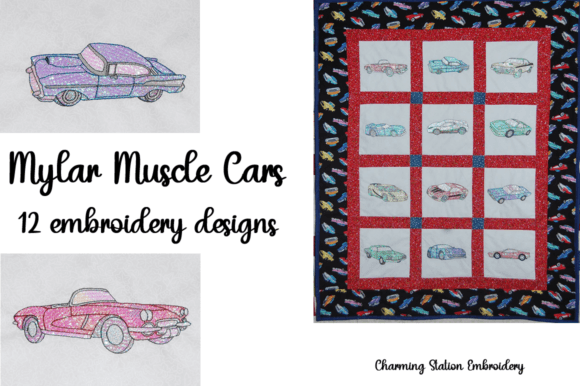
Opening the Mylar Muscle Cars digital embroidery file, the first thing that struck me was the clean, bold silhouette each car brings. We’re not talking about fussy, hyper-realistic renderings that lose themselves in 2mm details. Instead, the designer made smart choices: strong hood lines, exaggerated wheel arches, and enough negative space for the Mylar to really do its work. The metallic reflection transforms a simple stitch-out into something that looks like it was custom-painted in a garage. Even though this is a Transportation category piece, it leans into the romance of the open road—nostalgic, a little rebellious, and deeply appealing to anyone who’s ever loved an old car.
Because the set includes 12 distinct muscle car designs, it offers range without repetition. Some cars face forward with an aggressive stance; others show a classic side profile. I stitched a ’69 Charger-style design first, watching the thread shimmer under my sewing light. It felt like a medallion. Instantly, I could picture it on a quilt block, a denim jacket back, or even a man cave pillow. For a craft fair seller, this variety means you can offer a series—collectible patches, matching family gifts, or a sampler quilt that tells a story.
Where Mylar Muscle Cars Truly Shine in Personalized Gifts
Let’s talk about the real-world applications that make this file a quiet profit maker. The baby blanket I mentioned? I digitized a soft cotton receiving blanket in charcoal gray, centered a single car, and let the Mylar catch the light. It was tough yet tender—the perfect baby embroidery for a family that substitutes engine revs for lullabies. That blanket sold before I could even list it, because a friend saw the preview photo and claimed it for her own son’s nursery. For Etsy sellers, this is a standout custom embroidery request: a newborn gift that breaks the mold.
Beyond baby goods, my mind went to wedding gifts. A groomsman’s towel with a classic Mustang and the wedding date stitched in tiny metallic thread? Instant heirloom. I tested an embroidered towel using a flat-weave cotton terry (always add a water-soluble topper with Mylar to prevent sinkage) and the result was crisp, with the car’s details intact. Kitchen towels, aprons, and pillow covers become conversation pieces with this design. One of my favorite mockups was a heavyweight canvas apron with a muscle car stitched right on the chest pocket—a Father’s Day bestseller waiting to happen.
Quilts, Sets, and Storytelling Squares
The product description mentions a quilt, and it’s spot-on. Since there are 12 designs, you can map out a full lap quilt where each block tells its own gearhead tale. I’d recommend alternating dark and light fabric squares so the Mylar pops differently on each. For the small shop owner who sells blanket embroidery or ready-made quilts, this set turns a single digital embroidery file into a high-ticket item. For makers who attend car shows, having a finished quilt draped over a display table practically guarantees foot traffic. Even individually, each car works beautifully on a pocket square, a zipper pouch, or a lined canvas tote—subtle enough for everyday carry, but with that unmistakable hand-made shine.
Fabric and Surface Wisdom: Where to Stitch and Where to Pause
Not every surface is a good home for Mylar Muscle Cars. I learned this the hard way with an early test on a plush microfibre towel. The delicate wheel details and thin chrome accents got fuzzy, and the Mylar didn’t reflect evenly across the pile. My rule of thumb: for crisp metallic impact, choose a smooth, stable fabric. Cotton sateen, canvas, denim, and mid-weight linen are all stellar choices. The design also loves dark fabric—the contrast makes the car look like it’s gleaming under showroom lights. On a pale background, the Mylar can wash out, so if you’re doing a baby blanket in cream, consider using a subtle shadow stitch outline first to anchor the shape.
Stretchy baby clothes or thin jersey knits demand extra care. I don’t recommend this file for a onesie without an iron-on stabilizer sandwich: cut-away on the back, a firm topper, and careful hooping to avoid distortion. Curved surfaces, like a cap brim, could work, but the Mylar thread is less forgiving than polyester—it can crack if stretched, so stick to flat or gently curved areas. For items that will see frequent washing, like a kitchen towel, a dense stitch density and a quality poly core thread alongside the Mylar help prevent premature wear. I always tell customers to turn the item inside out and use a gentle cycle; with that care, the design endures.
The Giftability Factor: Why Buyers Pay Premium for a Handmade Touch
Emotional connection is the currency of personalized gifts, and Mylar Muscle Cars delivers it in chrome-plated spades. When a customer spots this design on a handmade product, they don’t just see a car. They hear an engine. They smell a leather interior. That nostalgia shifts the perceived value dramatically—suddenly a $15 pillow cover becomes a $45 keepsake, and buyers pay it happily because the gift feels intentional. For a wedding gift, stitching a coupe’s profile onto a linen handkerchief with the couple’s initials signals that you truly know their story. Customer trust grows when they see that a small shop owner chooses designs with this level of personality. It tells them, “This wasn’t mass-produced; it was made for someone like me.”
Product photography handles especially well with Mylar. I found that natural light at a low angle catches the metallic glint perfectly. In my Etsy listing mockup, I placed the embroidered pillow on a vintage leather chair and let the threads shine. Shoppers lingered on that listing twice as long as the standard embroidered towel shots. If you sell digital embroidery files or finished products, highlight that shine in your printable mockups—it’s often the deciding click.
Studio Notes: Practical Tips for a Flawless Stitch-Out
Before you load this design onto your machine, treat it like a new route on an old map—test first. Here’s my checklist, born from the few missteps I made early on:
- Stabilizer matters deeply. I used a medium-weight cut-away for stable wovens and a tear-away with a layer of adhesive mesh for trickier fabrics. For towels, a mesh stabilizer plus a WSS topper kept the stitches from burying into the loops.
- Check your thread color contrast. The Mylar needs a dark or brightly coloured underlay to really glow. I often pair a black or gunmetal 40wt polyester as the base, then layer the metallic on top.
- Confirm hoop size. Each design likely fits within a 4x4 to 5x7 inch area, but you must verify before stitching. A quick on-screen measurement in your software prevents a jump-stitch headache.
- Review stitch density. Mylar thread is thicker and less forgiving than standard embroidery thread. If the file runs too dense, you risk needle breaks or a stiff, puckered design. I always run a sample on scrap fabric first and, if needed, reduce density by 5–10% for metallic thread runs.
- Check small details after stitching. Wheels, grilles, and window outlines are critical. I use a magnifying glass to ensure no loose threads or misaligned satin stitches. If I spot a wobble on light fabric, I sometimes switch to a darker bobbin thread to frame the detail.
- Compare light and dark fabric mockups. The same design will feel completely different on a charcoal backpack versus a cream baby quilt. I keep both samples in my customer preview binder to show possibilities.
- Commercial licensing is non-negotiable. The product description didn’t spell out terms, so I reached out to the designer to confirm I could sell finished products made with this file. Always lock that down before listing—peace of mind is worth an extra email.
What I truly appreciate about Mylar Muscle Cars is how it respects a maker’s time. The stitch path I observed was efficient, with minimal trims and logical color stops. For a busy Etsy seller or a handmade business owner juggling custom orders, that means less thread waste and fewer machine pauses. The files unzipped cleanly, and my embroidery software recognized the format without hiccups—though I always advise buyers to double-check compatibility with their specific machine and hoop before purchase.
Testing this set reminded me why I fell for machine embroidery in the first place. It’s not just about the threads or the stabilizer; it’s about handing someone a piece of fabric that holds a piece of their history. Mylar Muscle Cars isn’t a generic transportation design. It’s a cluster of 12 tiny love letters to chrome, horsepower, and the people who keep those memories polished. Whether you stitch one onto a baby gift for a new dad or assemble a full quilt for a retirement party, the emotional payload is enormous. My studio now keeps this file in a “high-giftability” folder right next to wedding florals and whimsical nursery sets. For any craft business looking to add a dash of rugged sparkle to their lineup, this is a ride worth taking.