Christmas Falala Design Review for Small Business Merch
As an embroidery designer who regularly works with small brands, cafés, studios, and Etsy sellers, I see hundreds of seasonal designs every year. Most are either too generic or far too complicated to translate cleanly into commercial embroidery. Christmas Falala immediately felt like a breath of fresh air — playful without being childish, festive without shouting, and structured in a way that makes it genuinely useful for branded merchandise, not just one-off holiday décor.
The product description tells me this is a digital embroidery design, not a ready-made patch or iron-on. That is exactly what a business owner wants if they intend to stitch it onto their own products, control thread colors to match their brand, and maintain quality across multiple items. It comes with multiple embroidery file formats, so checking compatibility with your machine is straightforward. For anyone producing staff uniforms, customer gifts, or limited‑edition merch, starting with a clean, well‑organized file like this saves hours of editing time.
First Impressions and Visual Personality
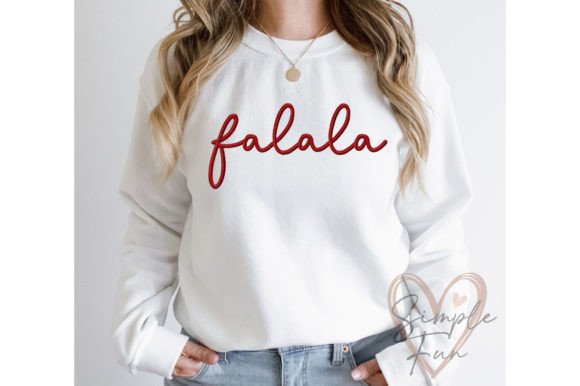
When I first opened Christmas Falala, I immediately pictured it on a craft bakery’s apron, a florist’s tote bag, or a small bookshop’s holiday tote. The phrase “falala” carries a melodic, nostalgic warmth. It hints at traditional carols, cozy gatherings, and handmade charm. The likely typography — whether script, serif, or a whimsical mixed case — suggests a friendly, approachable, and slightly rustic aesthetic. It’s not corporate or stiff; it’s personal, which is exactly the kind of asset a handmade business, boutique, or creative studio needs for seasonal branding.
What stands out most is the balance between readability and decoration. For branded patch use or logo accent embroidery, legibility is non‑negotiable. The letters in “Falala” appear well‑spaced and bold enough to hold up on textured fabrics. I could see this working beautifully as a chest accent on a denim work shirt, a center motif on a canvas tote, or a cap front design. The personality feels modern yet timeless, meaning it won’t look dated after one season if you decide to keep it as part of your winter brand rotation.
Design Versatility: Where Christmas Falala Shines
Christmas Falala isn’t just a pretty phrase; it’s an adaptable tool for a wide range of small business merch applications. Here are the areas where I believe it will perform best, based on years of testing similar typographic embroidery files:
- Embroidered patches: Even though this is a digital file and not a pre‑made patch, it can absolutely be stitched as a patch. Hoop a piece of felt or twill with stabilizer, stitch the design, and then cut it out with a merrow edge or satin border. These patches can be sewn onto denim jackets, backpacks, or offered as a retail add‑on.
- Staff aprons and uniforms: A café or bakery could place Christmas Falala on the bib of an apron in a soft red or forest green. It adds a seasonal touch without overpowering the primary logo. For front‑of‑house staff, it creates a warm, inviting look that customers notice.
- Caps and beanies: Curved cap fronts can be tricky, but a short horizontal design like “Falala” fits well on a low‑profile cap or above a visor. I’ve done similar designs on unstructured dad hats with great results.
- Tote bags and canvas pouches: Independent shops and florists love adding a festive detail to their reusable bags. A centered Christmas Falala stitched in metallic gold or matte cream thread instantly transforms a plain tote into a premium branded product.
- Boutique clothing and gift items: Think sweater cuffs, sleeve hems, towel bands, or the corner of a table runner. Delicate placement gives a “hidden gem” feel that customers love discovering.
- Product packaging accents: Stitching the design onto small fabric labels that can be sewn onto gift boxes or wrapping cloth elevates the unboxing experience for Etsy sellers and makers.
In every case, the design works best when integrated into a cohesive brand identity. I always advise clients to pick thread colors that echo their existing palette. A pet brand might use a warm beige and cream; a florist could go with sage green and blush. The design itself remains neutral enough to adapt while still evoking holiday spirit.
Where Cautious Sizing and Placement Matter
Not every spot is ideal for Christmas Falala, and a thoughtful embroidery designer review has to address limitations honestly. The biggest risk with any typographic design is scaling it too small. Here’s what needs careful testing:
- Miniature patch sizes: If you shrink this design below 1.5 inches wide for a keyring or a tiny lapel pin, the inner counters of letters like ‘a’ and ‘l’ may close up with thread. Stitch‑outs on a scrap of the exact fabric first are essential.
- High‑curve cap fronts: While possible, a curved surface can distort letter alignment. If you’re embroidering on structured baseball caps, consider using a smaller hoop and centering the design precisely, or digitize a slight arc to match the cap profile.
- Deeply textured fabrics: A thick wool sweater or a plush towel can swallow fine letter details. I’ve found that using a heavier water‑soluble topping and a slightly larger size helps the stitches sit on top rather than sinking in.
- Dark uniforms: If the thread color contrasts poorly, small letters can become hard to read. For a navy or black polo, I’d recommend testing a slightly bolder thread weight or adding a subtle satin outline to separate the letters from the fabric.
- Frequent industrial washing: Work shirts that go through heavy laundry cycles need a permanent, dense underlay and a soft backing. Short stitches in narrow areas might loosen over time if not properly stabilized and secured.
One thing I always tell my small business clients: run a test sew‑out on the exact garment before committing to a full production run. A design that looks flawless on a flat 2D screen can behave very differently on a textured, curved, or stretchy surface.
How Christmas Falala Affects Brand Identity and Customer Trust
Merch isn’t just about decoration; it’s a signal of professionalism. A crisp, well‑placed Christmas Falala stitched onto a uniform or product tells your customers that you pay attention to detail. It elevates a simple handmade item into a collector’s piece. I’ve watched small bakeries enjoy repeat sales simply because their seasonal tote bags became coveted items in the neighborhood.
From a trust perspective, consistent embroidery across your products creates visual recognition. If a boutique’s holiday apron, shopping bag, and tissue wrap all carry the same embroidered motif, the experience feels intentional. The design’s friendly tone also softens the brand voice—customers associate it with warmth and giving. That emotional hook can lead to stronger buyer engagement on platforms like Etsy, where handmade storytelling matters heavily.
For a handmade product seller, offering a limited‑edition item with Christmas Falala embosses a sense of seasonal exclusivity. It can also justify a slightly higher price point. When someone sees a cap or pouch with beautifully stitched embroidery, they instinctively value it more than a screen‑printed alternative. The tactile quality of thread, the slight dimension of satin stitches, and the permanence of embroidery all contribute to a perception of higher craftsmanship.
Practical Embroidery Designer Notes
Over the years, I’ve adopted a strict checklist before introducing any new machine embroidery design into a commercial production line. Christmas Falala is no exception. Here’s the workflow I’d follow and recommend to any business owner:
- Check file format and hoop size: The product page mentions multiple embroidery file formats but doesn’t specify exact hoop dimensions. Before purchasing, confirm the design fits your hoop range. A design that requires a larger hoop than what you own can derail a project fast.
- Stitch density review on screen: Open the file in your embroidery software. Look for overly dense areas that could cause puckering on lightweight fabrics, or sparse zones on dark materials. A quick density preview saves wasted thread and time.
- Test in black and white first: I know it’s a Christmas design, but a monochrome test sew‑out on scrap fabric reveals the pure structural integrity. If it reads well without color, it will read even better with festive threads.
- Thread color mockup: Using a digital mockup generator or your software’s thread palette, simulate the design on a photo of your actual product. Show this to stakeholders or your team before pressing start. This is especially important for brand identity alignment.
- Stabilizer match: For tote bags, use a medium‑weight cutaway. For sweatshirts, a no‑show mesh works well. For caps, a tear‑away with a light adhesive spray prevents shifting. Always pair the right stabilizer with the fabric, not just the design.
- Real fabric test: Never skip this. Perform at least one full test on the same material, same color, same layering. Wash it once if the item is washable. Check for thread breaks, run the edge of a fingernail over stitches—any roughness or snagging means tension or underlay issues.
- Design pairing: If you intend to add Christmas Falala near an existing brand logo, stitch them side by side on your test piece. Observe how the visual weight balances. Sometimes a simple phrase can compete with a complex logo; adjust placement accordingly.
- Commercial license confirmation: Even if the design is sold with a commercial use grant, read the specific terms. Some designers restrict reselling as a standalone patch or require attribution. I always keep a printed copy of the license with the file folder.
I also advise creating a quick reference guide for your production team: thread brand, color numbers, recommended hoop size, speed setting, and any notes from the test run. This prevents drift between batches and keeps every stitched piece consistent.
Final Verdict from an Embroidery Designer’s Desk
Christmas Falala is one of those rare seasonal designs that a business can actually use beyond a single holiday rush. It’s cheerful but not gimmicky, short enough for compact placements, and scalable enough for large focal pieces. For a small café, a handmade shop, or a creative studio, it offers a friendly machine embroidery design asset that can be easily integrated into existing merch lines without a complete rebrand. The key is in the execution: careful size testing, thoughtful color selection, and proper finishing.
If you treat this digital file as a building block rather than a finished object, you’ll unlock its real commercial embroidery value. Use it to create a stamped denim jacket for a holiday market, a set of matching staff aprons, or a limited run of gift pouches. I’ve seen first‑hand how a well‑chosen phrase stitched in the right place can make a product memorable and remarkably shareable on social media. Christmas Falala has that quiet, endearing quality that customers genuinely respond to.
Before you click purchase, just double‑check the hoop requirements, the file format compatibility, and the license terms. Then run your tests, craft your mockup, and watch how a simple “Falala” transforms ordinary fabric into a branded experience.